Robots that feel what they carry.
We make electronic skin for the arms and torso of humanoid robots. It stays quiet until something touches it, then tells the robot where.
Press anywhere. Hold still, and it goes quiet.
0 taxels on this screen
0 conversions in the last second
Touch stops at the hands.
Most humanoids have touch sensors in their fingertips, if anywhere. The forearms and chest do the lifting and feel nothing.
The load sits on the arms.
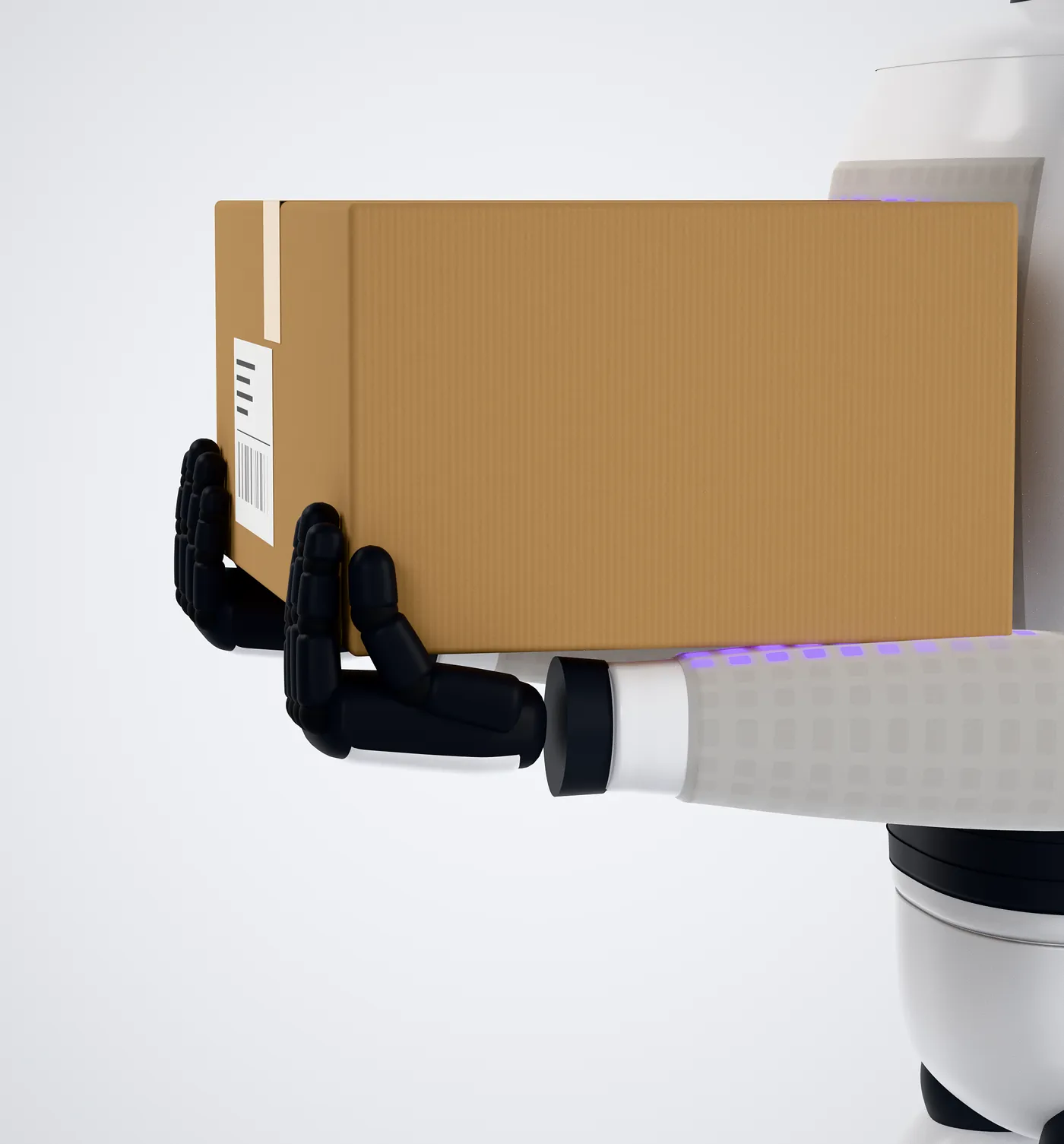
Carrying a box, a humanoid presses it against both forearms and its chest. That is where the weight rests, and where it starts to slide.
Skin tells it where.
Joint torque sensors feel that the arm was pushed, and lose track when two things press at once. Skin on the arms and torso tells the robot where it is touched, in several places at once, and when each contact starts, shifts or ends.
Concept render. Lit cells are taxels in contact with the carton.
Quiet until touched
Most skins sample every taxel on a clock, touched or not, and leave the robot's computer to sift through all of it. On a humanoid that is thousands of channels. Ours converts only when the touch changes, so the data follows what is happening on the skin.
Pressure on one taxel: press, hold, release
Clocked readout: every sample, touched or not
Ours: converts only when the touch changes
Data from this one taxel in 2 seconds, sampled at 1 kHz, 10 bits per sample or event
4.5 times less data for this press.
During the 0.8 s hold it produces 4 events. An untouched taxel, which is most of a humanoid's skin at any moment, stays just as quiet.
The readout chip is measured and published.
- Power per channel
- 95 to 250 nW (analog-to-digital converter)
- Resolution
- 10.1 effective bits
- Area
- 8 channels in 0.04 mm²
- Process
- Advanced CMOS
Mou et al., IEEE Journal of Solid-State Circuits, vol. 61, no. 7, pp. 3169 to 3180, July 2026. Read the paper
Already on a robot arm
Our first prototype runs on a Franka research arm at TU/e in Eindhoven: a skin-covered cylinder, read out by our own electronics.
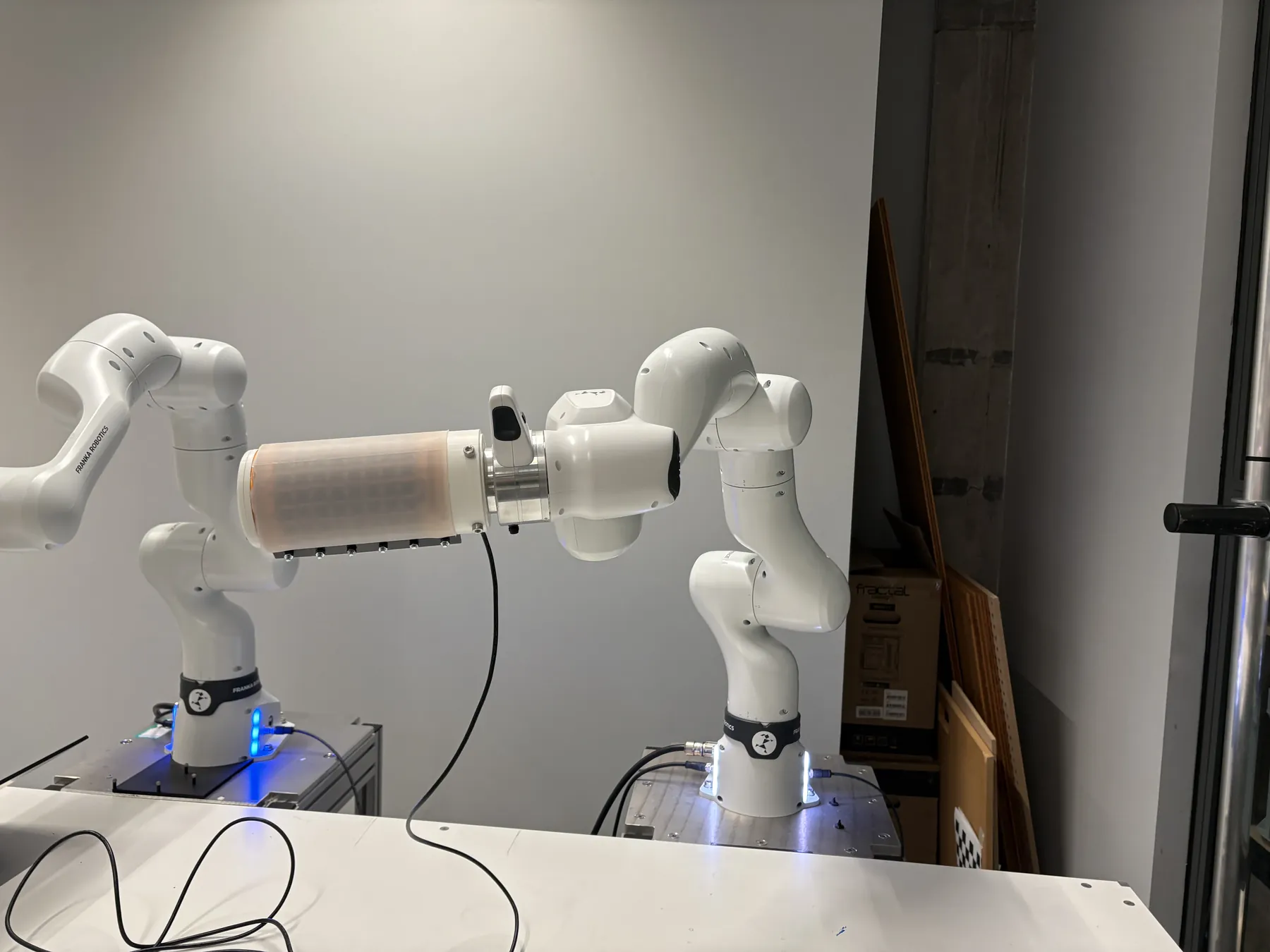
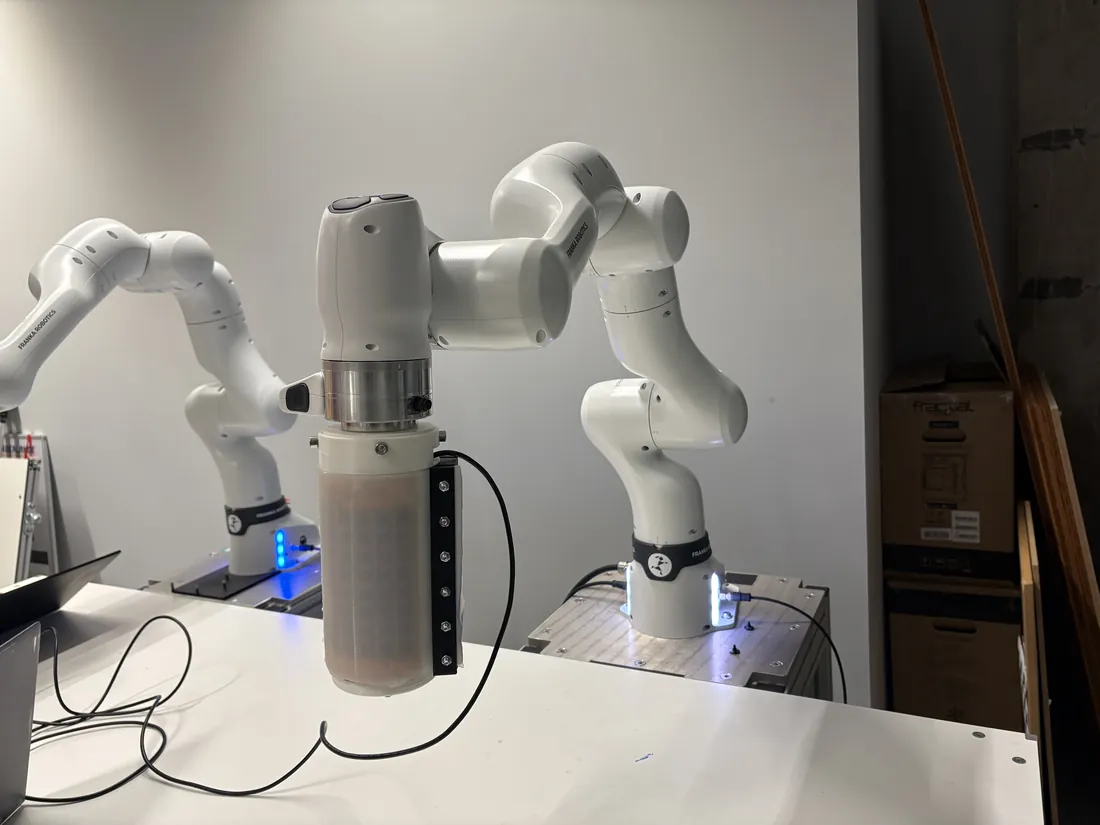
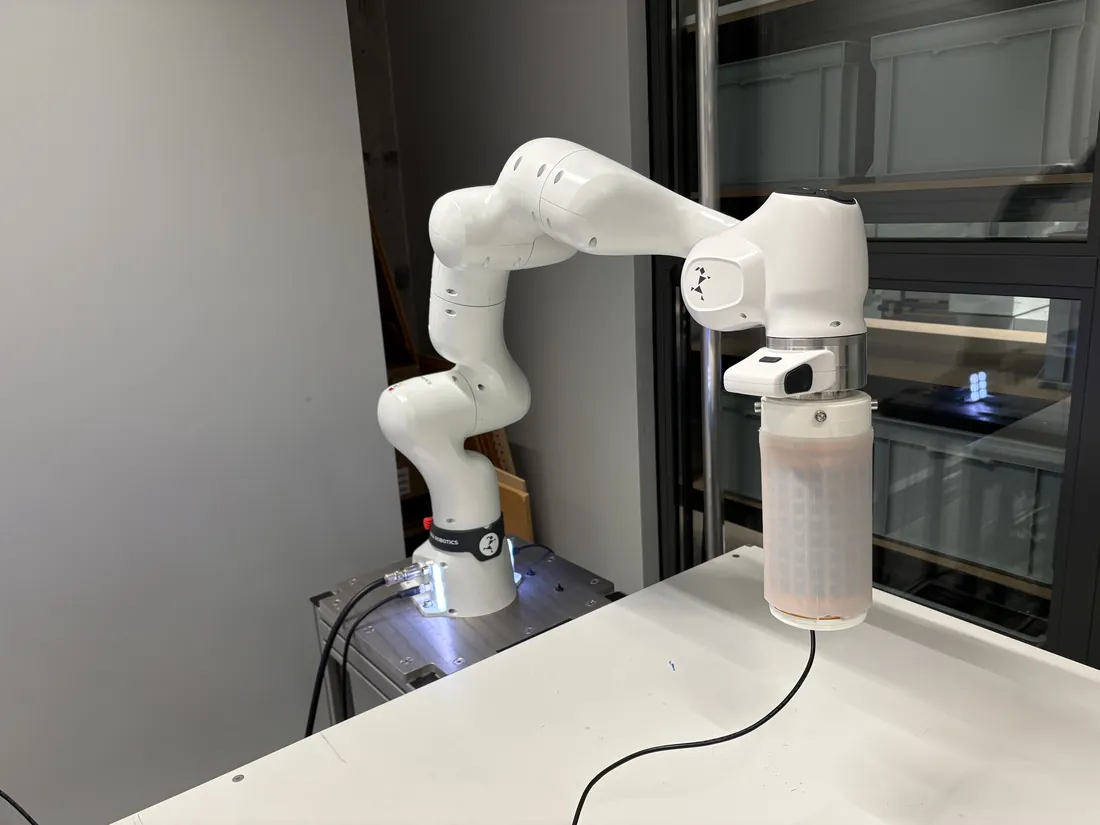
Photos of our demonstrator, TU/e, 9 October 2026.
Where it goes
-
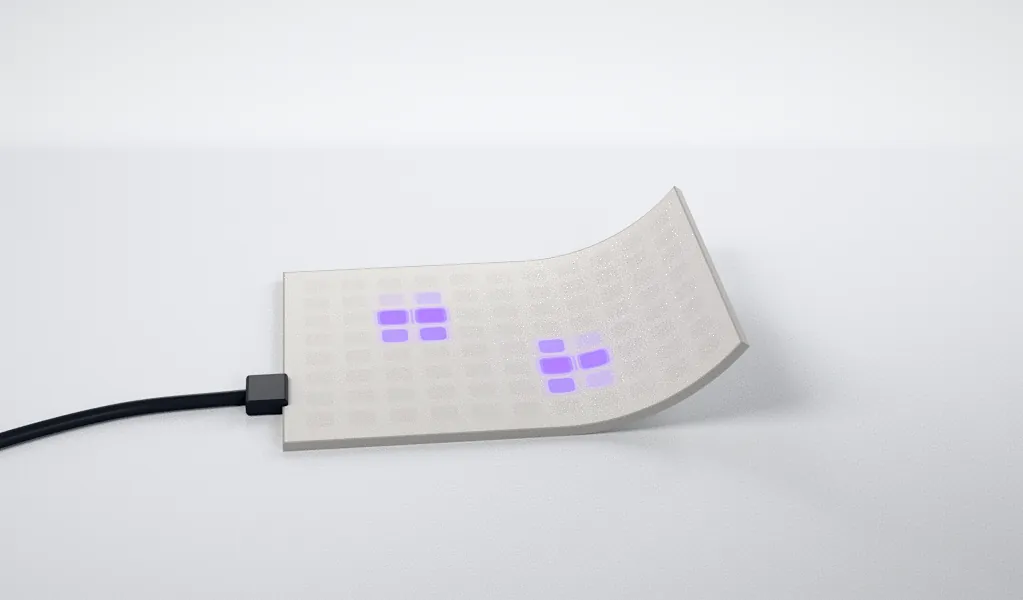
2027
Skin kits for robot-learning labs and humanoid R&D teams: patches, readout and a ROS 2 driver.
-
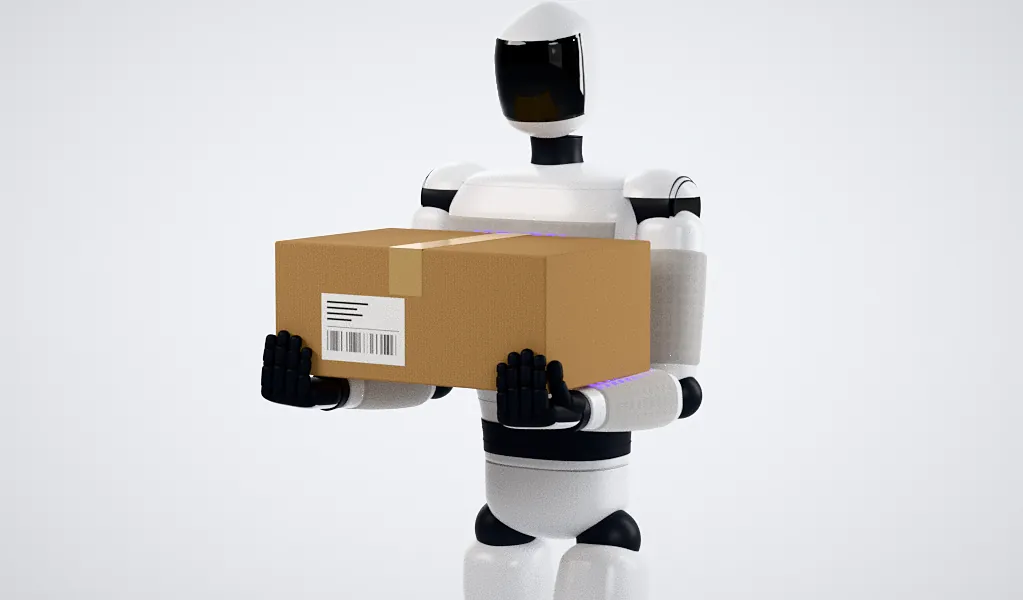
2028
Skin designed into humanoids that work near people.
-
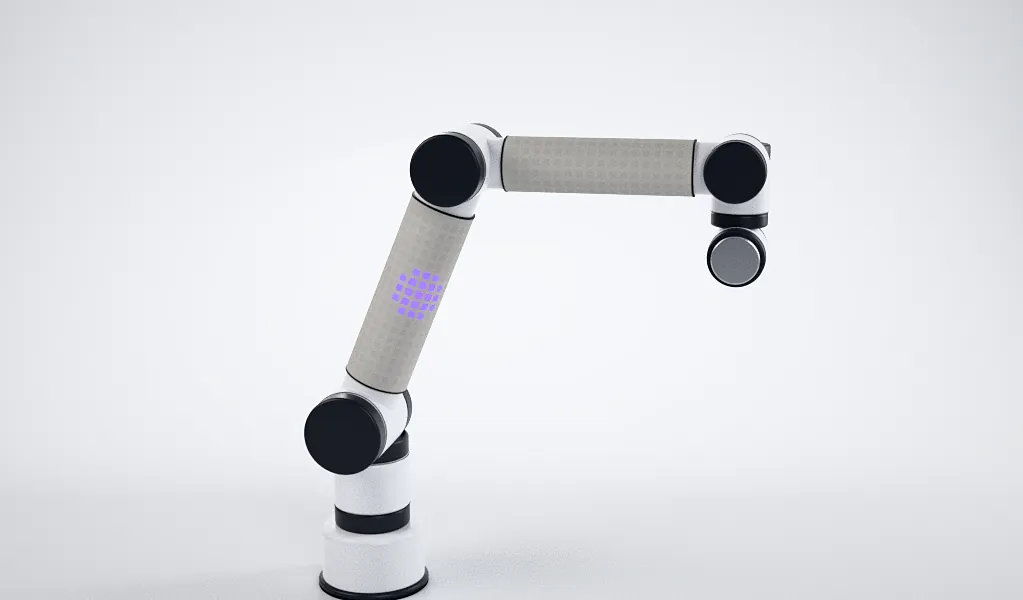
After
Cobots, and the readout chip for other skin makers.
Concept renders.
The FIRST in FIRST Labs is short for
- Flexible
- Integrated
- Robotic
- Skin
- Technology
Team
Daniel Tyukov
CEO
MSc Microelectronics at TU Delft, designing chips that only work when their input calls for it. Founded LeenLoket, a smart-locker lending service, and sold it to the Municipality of Eindhoven.
Jixuan Mou
CTO
Researcher in the Integrated Circuits group at TU/e, working on robot skin since 2022. First author of the readout paper, and built the demonstrator on the arm.
Haodong Zheng
Founding engineer
PhD candidate in the Human-Technology Interaction group at TU/e, working on robot touch since 2022. Built a system that lets a robot arm recognise an object and find its pose in a few touches.
Marco Fattori
Adviser
Assistant professor in the Integrated Circuits group at TU/e. Co-founder and CTO of MicroAlign, a TU/e spin-off.
Building or training humanoids?
We are looking for the first teams to put skin on their robots' arms and torso.
Email contact@danieltyukov.com